A clothing shop concept where every garment is drawn in the page rather than photographed.
Capabilities used
- Brand Strategy & Identity
- Creative Design & Content Production
- Web Development & Marketing Funnels
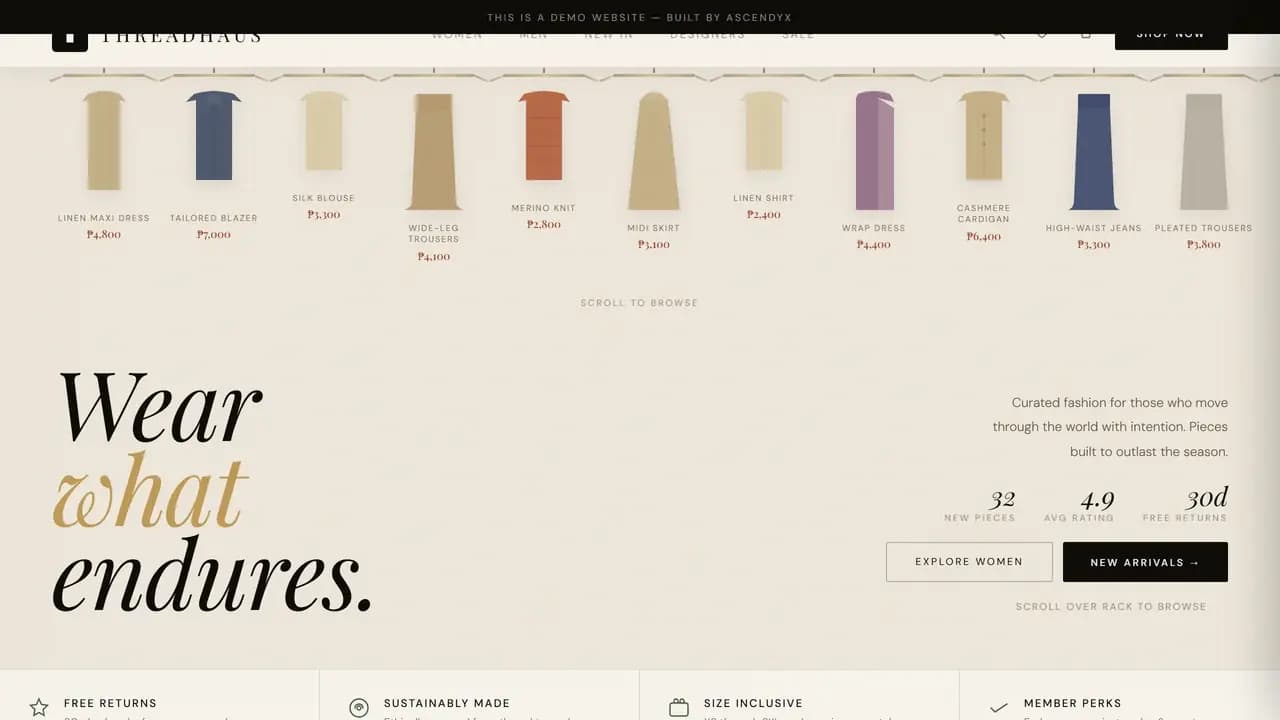
Inventing a Shop
ThreadHaus is a clothing shop we invented, and the catalogue, the sizes, the prices, the reductions, the delivery windows and the returns policy all had to exist before the first screen could be drawn. A brand needs a name and a point of view. A shop needs stock.
That is the part of a shop concept nobody sees and everybody feels. Get it wrong and every screen after it has a hole in the middle where a real decision should be.
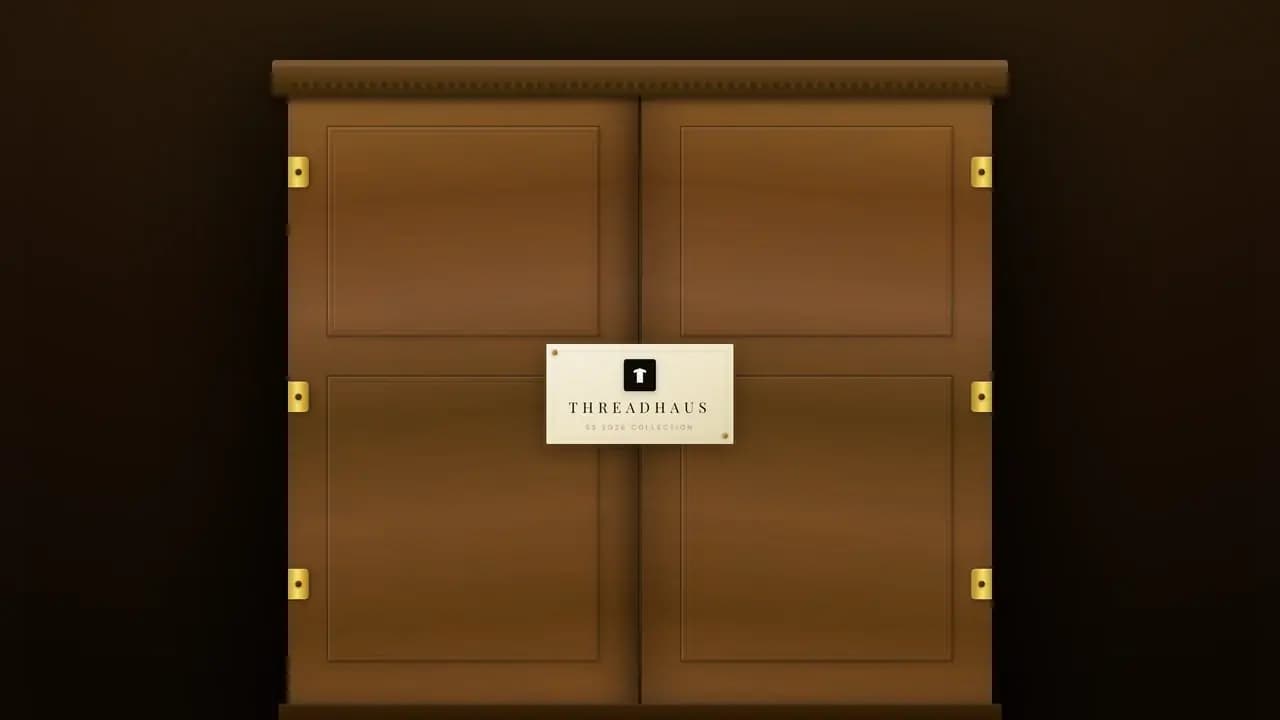
The Wardrobe Gate
The site opens closed. A pair of wardrobe doors fills the screen with a brass plate between them, and nothing behind them is reachable until you pull them apart.
Two other demos here hold a visitor at the entrance, so the question was whether this one earns another. It does, because the thing being opened is the shop's own subject. You are not waiting for a page to load. You are opening a wardrobe.
The Rail
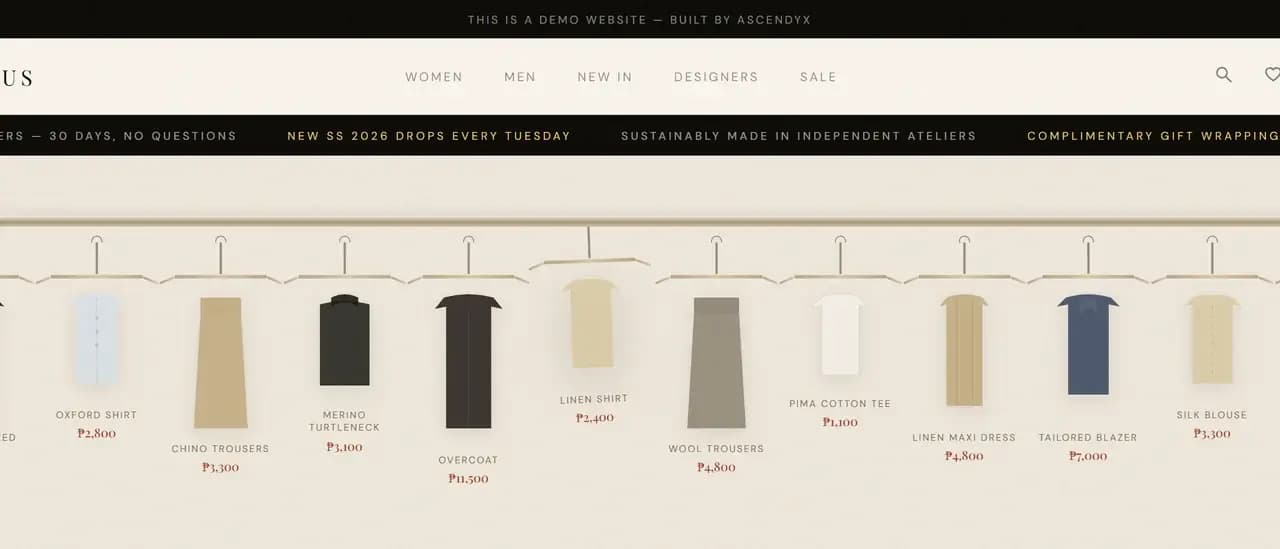
Instead of a grid, the home page hangs its garments from a rail on wooden hangers, and browsing means pushing them along it. The rail runs without end, so it never reaches a last item or an empty state.
It is the one part of the design that behaves like a shop floor rather than a website. Scrolling a grid tells you how much is left. Sliding a rail tells you nothing, which is closer to how looking at clothes actually goes.
Six Pages, One Document
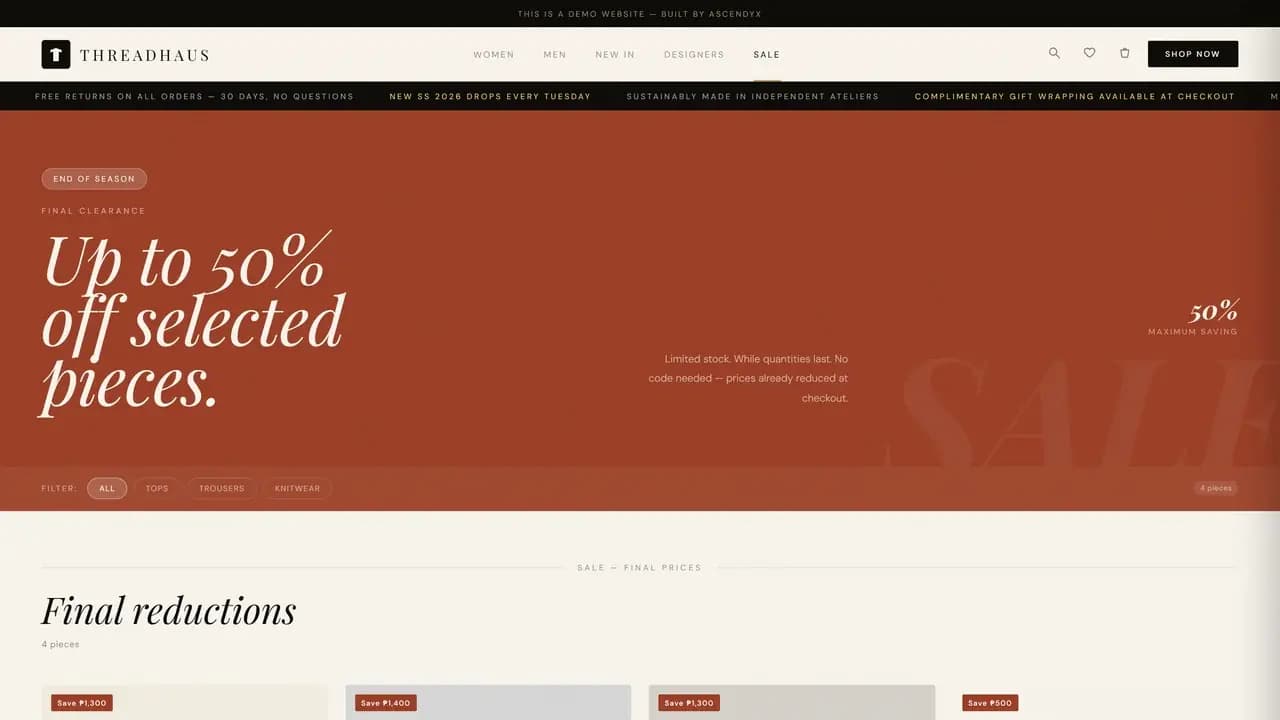
Women, Men, New In, Designers and Sale are not separate pages in any real sense. They sit inside the same file and are hidden and shown, which is why moving between them costs nothing and why none of them can be linked to on its own.
That is the trade the demo makes. It buys a shop that never blanks between sections, at the price of a shop that a search engine reads as a single page.
The Ateliers
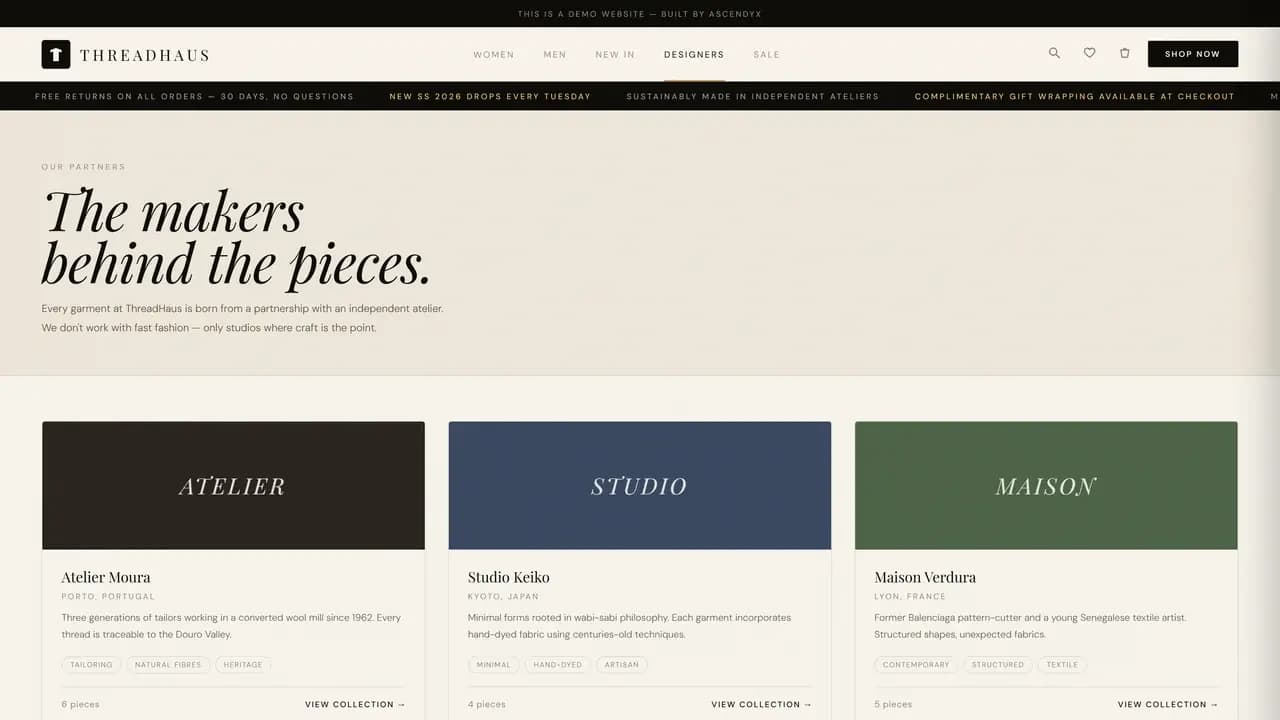
The Designers page invents six workshops, each with a city, a house style and a short life story. It is the most concentrated writing on the site, and the closest the concept comes to having a voice rather than a look.
Six paragraphs do more for a clothing brand than another row of product ever would. A garment with a workshop behind it reads differently from the same garment on a rail with a price, and none of that costs a single image.
Two of the six reach into the real world for texture. One founder is written as a former Balenciaga pattern cutter, and one workshop says its patterns were developed with the local Zapotec community. Balenciaga is a real house, the Zapotec are real people, and neither had any part in this.
Overlays, Not Pages
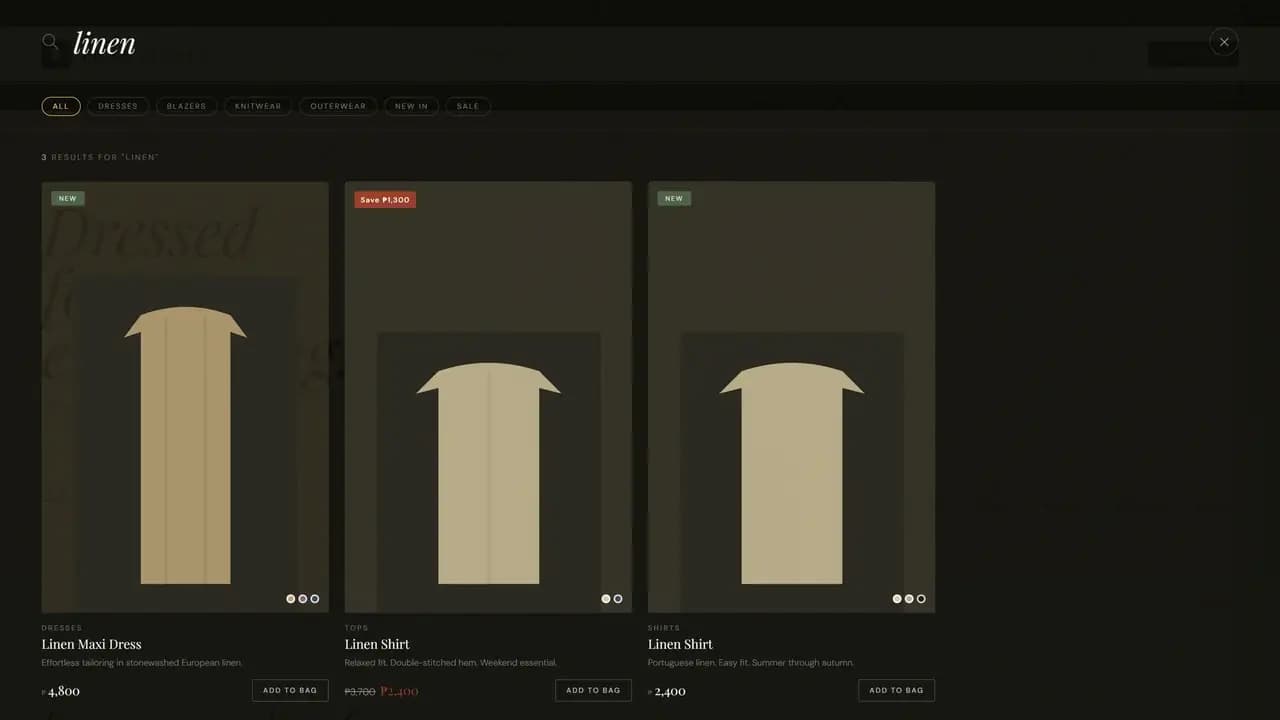
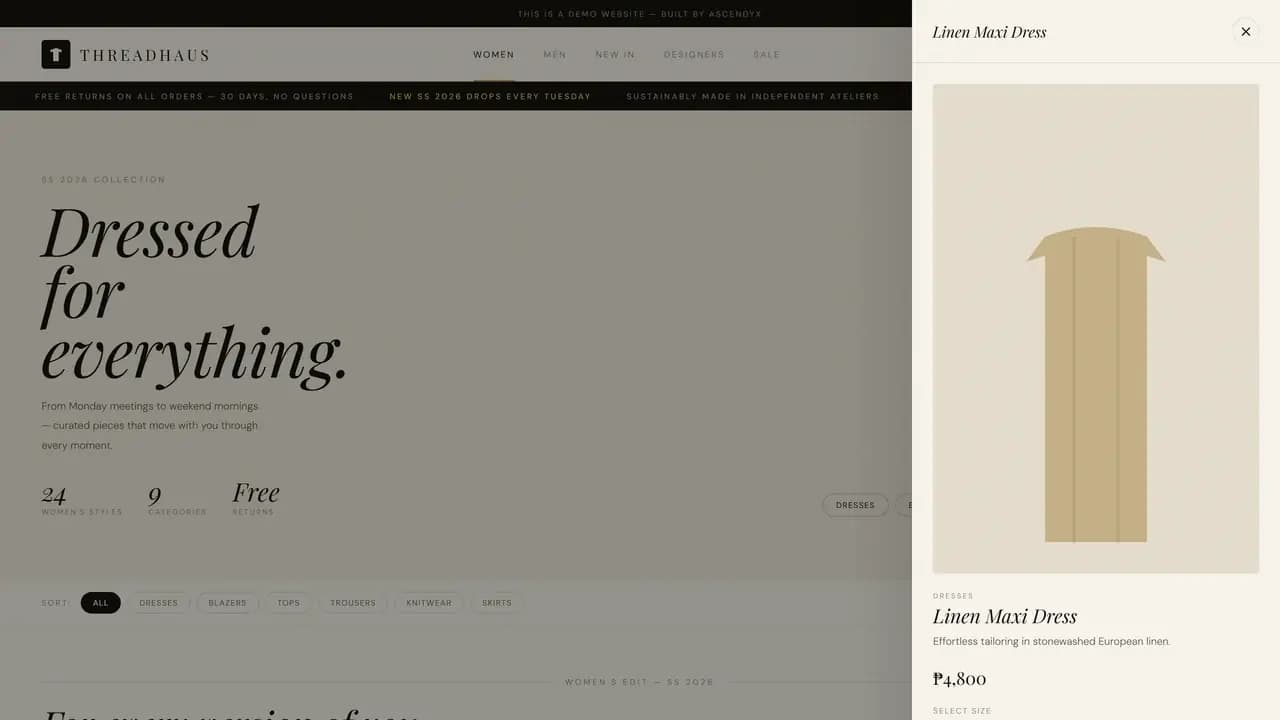
Search, the saved list and quick view are not places you go. They open over whatever is already on screen and close again, which is how a shop keeps you from losing your place while you look sideways.
Most of that work does not show. Quick view has to know the garment, its sizes and its colours without fetching anything, and search has to answer while you are still typing.
Drawn, Not Photographed
There is not one image file on this site. No photographs, nothing loaded from anywhere else, no stock. Every garment on the rail and in every grid is drawn in the page itself, as shapes described in the markup.
So the document is large, and it is large for an unusual reason. Nothing was fetched from a folder sitting beside it. The drawings and the markup are the same object.
The Structured Data Layer
Underneath the page sits a block of structured data describing the store: what it is, the payment methods, the handling time, the delivery window, the returns policy. It is the layer a search engine reads instead of the layout.
Building it out on a concept is the point. A shop is not finished when it looks right, it is finished when the machine reading it can tell what it sells and on what terms, and that half of the work never appears on a screenshot.
Keep exploring
Next project: SkincareWant something like this for your business?
Tell us what you're trying to grow, and we'll reply with a straight answer on whether and how we can help.